


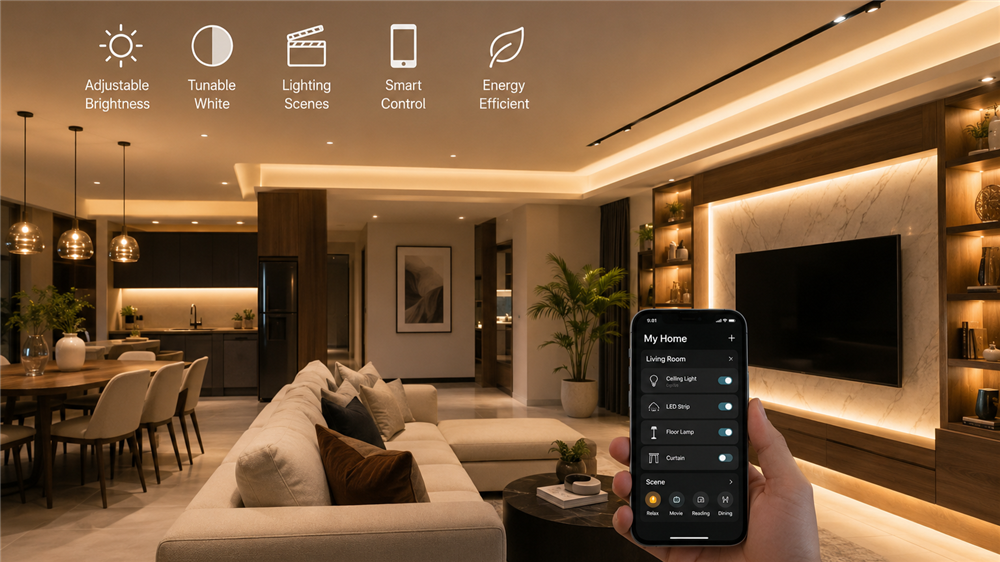
You don't need to spend thousands on renovation to make your home look more luxurious. A smart lighting system can instantly improve the atmosphere, highlight your interior design and create different moods using your smartphone, voice assistant or automation. For many Malaysian homeowners, upgrading lighting is one of the easiest and most cost-effective ways to modernise a home while improving comfort, convenience and energy efficiency.
Can smart lighting really improve my home's interior without renovation?
Yes. Smart lighting can be a game changer for your home’s appeal, with the ability to change brightness, colour temperature and lighting settings. Warmer lighting allows for a more comfortable ambiance while cooler lighting will make your area feel brighter and more expansive. These adjustments can make your current furnishings and decor look more premium without needing any structural work.
Are smart lights worth it in Malaysia?
Sure. Smart lighting is good for Malaysian homes as it is convenient, saves energy and can be changed according to different lifestyles,” he said. Whether you live in a condo, terrace house or a bungalow, you can program your lights to turn on and off automatically according to your daily routine. This will make your home more comfortable and save you money on electricity costs.
What rooms should I add smart lighting to?
Start with the rooms you use the most:
- The living room is a room for relaxing and entertaining guests.
- Bedroom for better sleep.
- Kitchen to make it easier to see while you cook.
- The home office is for getting work done.
- Hallways and entrances are for safety and ease of use.
Start with one or two rooms to see the benefits before adding it to the rest of your home.
What's the difference between smart bulbs and smart switches?
You can change the colours of the lights with smart bulbs, and give each bulb their own individual control. Smart switches, however, allow you to control the lights while still feeling like a regular wall switch. If you have a home with a lot of lighting fixtures, smart switches are generally a better, more scalable option.
Can smart lighting be expanded into a complete smart home?
Yes. Smart lighting is usually the first step to a full connected smart home. Once your lighting is in place, you can easily incorporate smart door locks, security cameras, motion sensors, motorised curtains, air conditioning control and voice assistants. If you pick a compatible ecosystem from the start, upgrading in the future is much easier and cheaper.
Why Smart Lighting Matters in Malaysia
Due to the tropical climate of Malaysia, daylight changes rapidly, particularly during the rainy seasons. Hot afternoons mean many homeowners are staying inside, and the lighting inside is an important part of everyday comfort.
Open-plan layouts are becoming more common in more modern condos and landed homes, where a single lighting setup affects multiple spaces. Homeowners can use smart lighting to create different moods in the same area without making any physical changes to the layout. Electricity prices remain a concern for households, and automation features such as schedules, occupancy sensors and dimming also cut down on unnecessary energy consumption.
Real-Life Use Cases
The Living Room Entertainment
The living room is one of the best places to put smart lighting. Most families spend time together in their living room. The brighter neutral lighting creates a welcoming space for reading, cleaning, or hosting guests during the day. In the evening, with just one tap or voice command, you can switch to warm, dimmed lighting to create a cozy atmosphere for watching movies or unwinding after work.
A More Relaxed Bedroom
Smart lighting can create a healthier and more relaxing bedroom atmosphere. A bright light is helpful when you are getting ready in the morning, and a warm, dim light helps your body to relax before sleep. Set your lights to slowly increase in brightness as a gentle wake up alarm or to decrease automatically at night to help build a better bedtime routine. These little changes will not only add to your comfort, but will also make your bedroom look like a premium hotel room and you don’t have to do expensive renovations.
A Working Home Office
Now that many Malaysians are working from home at least part of the week, adequate lighting is more important than ever. Smart lighting allows you to use bright, cool white lighting during working hours for better visibility and less eye strain. Once your workday is over, you can change to a warmer lighting scene immediately to turn the office into a warm space for reading or your hobbies. This flexibility allows for a single room to serve multiple purposes, and to be a pleasant space at all times of the day.
Tips and Best Practices
Mix Different Lighting Types
Instead of just relying on one overhead light fixture, mix ambient, task and accent lighting to create depth and balance in your home. Ceiling fixtures provide general lighting, while table lamps, LED strips and under-cabinet lights draw attention to specific areas and decorative elements. The use of various light sources increases the complexity of the interior design and contributes to the feeling of spaciousness, warmth and friendliness of rooms.
Choose the Right Color Temperature
The temperature of color has a great influence on the atmosphere of a room. Crisp white illumination is best used in kitchens, bathrooms and home offices where clarity and focus are critical. The warm white lighting is the best option for bedrooms and living rooms to create a relaxing and cozy ambiance. Using the right color temperature in each space not only enhances your furniture, flooring and wall colors, it makes each room more enjoyable to be in.
Develop a Scalable Smart Home Infrastructure
Also, consider your future needs when buying smart lighting. Look for items that are part of a cohesive smart home framework so that it is seamless to add more devices in the future. For example, after you’ve got smart lighting installed, you might want to add automated curtains, motion detectors, surveillance cameras or smart locks later on. By starting with a scalable system, you won't need to replace devices later, leading to a smoother smart home experience as your needs grow.
Common Mistakes to Avoid
Buying Based on Price Alone
There are plenty of homeowners who go for the cheapest smart lighting they can find, ignoring things like compatibility, quality and long-term reliability. While the upfront cost might be lower, such devices often require separate apps, or are not compatible with other smart home systems. You’ll be happier with your customers and they’ll be happier with you if you work with a reliable ecosystem from the very beginning, saving you money later on by not having to replace it.
Using the Same Lighting Everywhere
It’s a common mistake to use the same brightness and color temperature throughout the house. Each room has its purpose, and the light should serve that purpose. A bright natural light might be okay for a kitchen but can look harsh in a bedroom or living area. Creating different lighting scenarios for different zones will increase comfort, make the interior look better and your home look more purposeful.
Forgetting About Automation
Some homeowners have smart lighting, but they just use it like a normal light switch and don't take advantage of many useful features. You can set schedules, create lighting scenes, and link the lights to motion sensors or voice assistants to make life easier and save energy. Automation makes your home react to your daily routine, making smart lighting a system that is much more than just remotely controlled lights.
Smart Lighting vs Traditional Lighting
| Feature | Smart Lighting | Traditional Lighting |
| Brightness Control | Adjustable | Fixed |
| Colour Temperature | Adjustable | Usually fixed |
| Smartphone Control | Yes | No |
How to Get Started
Step 1: Identify the rooms you use most
Start with spaces like the living room, bedroom, or kitchen where lighting has the biggest impact on comfort and appearance.
Step 2: Choose a compatible smart lighting ecosystem
Select devices that can grow with your future smart home plans instead of buying standalone products.
Step 3: Install smart lights or smart switches
Depending on your existing setup, you can begin with smart bulbs, smart switches, or LED light strips.
Step 4: Create lighting scenes
Set up scenes for working, relaxing, dining, entertaining, and sleeping to match your daily routine.
Step 5: Expand your smart home
Once you're comfortable with smart lighting, add smart curtains, sensors, smart door locks, cameras, or other home automation devices for a fully connected experience.
Ready to Transform Your Home?
Book a free smart home consultation with Copper Connect to discover how smart lighting can enhance your home's interior without expensive renovations.


