Close
You have no items in your shopping cart.
Search
RSS

Blog posts tagged with 'smart lighting'

Can a Smart Home Reduce Your Electricity Bill in Malaysia

Can a Smart Home Reduce Your Electricity Bill in Malaysia


Certainly, a smart home can help you save on your electricity bill in Malaysia but it doesn’t mean you will get cheaper electricity costs. Automation, smart lighting, sensors and energy monitoring help reduce unnecessary electricity consumption and save you money.

For example, schedules can prevent appliances or devices from running longer than they should, and can turn off lights when a room is empty. The biggest advantage is the increased control that homeowners have over when, where and how electricity is used. 


Why Does Electricity Usage Matter in Malaysia? 

The amount of electricity you use is largely determined by the size of your house, the appliances you have, your daily routines and how long those appliances are switched on. TNB said electricity consumption would go up with longer hours of operation, larger appliances and higher loads like air-conditioners, fans and water heaters. 

This is especially important in Malaysia where air conditioning, lighting and other electrical appliances are part and parcel of daily life. Your smart home doesn't need to control everything in your house. Automations can help cut down on wasted electricity on a daily basis. 


How Can a Smart Home Reduce Electricity Bills?


1. Smart Lighting Stops Lights From Being Left On

One of the easiest ways to cut down on wasted electricity is to automate your lighting. Instead of people needing to remember to turn off lights, smart lighting can follow schedules, scenes or sensor triggers. The hallway lights might switch on when someone moves and switch off automatically after a period of time. This is particularly useful in places like stairwells, bathrooms, storerooms and hallways where lights are often left on.


2. Smart Sensors Reduce Unnecessary Usage

A smart sensor can help your home respond to what is actually happening.  For example, a motion sensor in a bathroom can turn the light on when someone enters and off after the room becomes empty. A door or window sensor can also be connected to other smart devices to create useful automation routines.

This changes the way your home uses electricity. Instead of lights staying on because someone forgot to switch them off, the system can respond automatically.


3. Scheduling Prevents Electricity Waste

Many devices don’t need to be on all the time. Smart plugs and switches can be programmed to turn on or off a specific device at a set interval with automation routines. For example, outdoor lights may turn on at dusk and turn off automatically at night. Routines can also be set up according to your family’s daily schedule.

For example, a “Away” scene could automatically turn off certain lights and devices if everyone usually leaves the home at 8 a.m. When someone comes back, you can reestablish the devices that are really needed with a “Home” scene.


4. Smart Home Automation Can Make Energy Monitoring Easier

Knowing that your electricity usage is high is useful. Knowing where the electricity is going is even better. Energy monitoring can help homeowners understand consumption patterns and identify areas where electricity may be wasted.

For example, if your electricity usage consistently increases during certain hours, you can investigate which appliances or routines are responsible.TNB also recommends monitoring electricity consumption to identify where energy can be used more efficiently.


5. Smart Automation Helps Build Better Daily Habits

Sometimes the problem is not an inefficient appliance. It is the way we use it. A homeowner may leave lights on in empty rooms, forget to switch off certain devices before sleeping or run appliances longer than necessary. Automation reduces the number of these small mistakes.

Over weeks and months, preventing repeated unnecessary usage can contribute to lower electricity consumption. This is why smart home energy savings are often about consistency rather than one dramatic change.


Real-Life Use Cases for Malaysian Homes


The Family That Forgets to Switch Off Lights

“Picture a family living in a two-story house. The children often leave the lights on in the bedroom and bathroom after they’ve gone. Homeowners can install motion sensors and smart lighting in certain areas instead of constantly reminding them. The lights can be programmed to turn themselves off if the room is empty. The family still gets the light they need, but no more.


The Homeowner Who Leaves for Work Every Morning

A working couple may leave the house at different times and occasionally forget to switch off lights, fans or selected devices. An Away Scene can automatically turn off selected smart devices when everyone leaves. This provides convenience while reducing the chance of electricity being consumed unnecessarily during the day.


The Home With Multiple Lighting Zones

A larger Malaysian home may have many lights across the living room, dining area, bedrooms, kitchen and outdoor areas. Instead of switching everything on at once, homeowners can create different scenes based on how the space is being used.

For example:

  • Morning: Only essential lighting
  • Evening: Living and dining lights
  • Movie Night: Dim selected lights
  • Sleep: Switch off unnecessary lights
  • Away: Turn off selected lighting automatically

This gives homeowners more control over electricity usage without sacrificing comfort.


Tips & Best Practices for Saving Electricity


Start With High-Waste Areas

Do not install smart devices everywhere just because you can. Start with areas where electricity is commonly wasted, such as corridors, bathrooms, outdoor lighting and rooms that are frequently left empty.


Automate Repetitive Tasks

Think about what your family repeatedly forgets to do. If the answer is "switch off the lights", start with smart lighting. If you want better control over selected appliances, consider smart plugs or switches.


Keep Automation Simple

A few useful automations are better than dozens of complicated routines. Your system should make energy saving easier, not become another thing your family has to manage.


Common Smart Home Energy-Saving Mistakes


Mistake 1: Thinking Smart Devices Automatically Save Electricity

A smart bulb does not necessarily save more electricity simply because it is smart. Energy savings come from efficient lighting and using automation to reduce unnecessary operating time.


Mistake 2: Automating Everything

Adding smart devices to every appliance can increase your upfront cost without creating meaningful savings. Focus on devices that solve a real problem.


Mistake 3: Ignoring the Biggest Energy Users

Switching off a few lights is useful, but homeowners should also pay attention to major loads such as air conditioning, water heaters and refrigerators. Smart automation works best as part of a wider energy-efficiency strategy.

Mistake 4: Choosing Devices Without Considering Compatibility

A collection of smart devices that cannot communicate properly can make automation difficult. Choose a compatible ecosystem before buying multiple devices.


Smart Home vs Traditional Home: Which Uses Less Electricity?

Feature Traditional Home Smart Home
Forgotten lights Common Can switch off automatically
Remote control Limited Smartphone or voice control
Switching lights Manual Manual, scheduled or automated


How to Get Started With a More Energy-Efficient Smart Home

You do not need to convert your entire house immediately.

Step 1: Identify Your Electricity Waste

Look around your home and take note of what lights, appliances or devices are often left on when they don’t need to be.

Step 2: Choose One Area

Start with one high-use or high-waste area, such as the living room, hallway or bathroom.

Step 3: Pick the Right Smart Device

Depending on the problem, you might need a smart bulb, smart switch, smart plug, motion sensor or a broader automation system.

Step 4: Create Simple Automations

Start with practical things like automatic lighting, schedules and Away or Sleep scenes.

Step 5: Monitor the Results

Compare your electricity consumption over time to see if your new habits and automations are really reducing unnecessary consumption.

Step 6: Expand Gradually

Once the first automation is working well, begin branching out to other areas of your home.


Ready to Make Your Home Smarter?

Book a free smart home consultation with Copper Connect and explore how smart lighting, smart security and home automation can work together in your home.
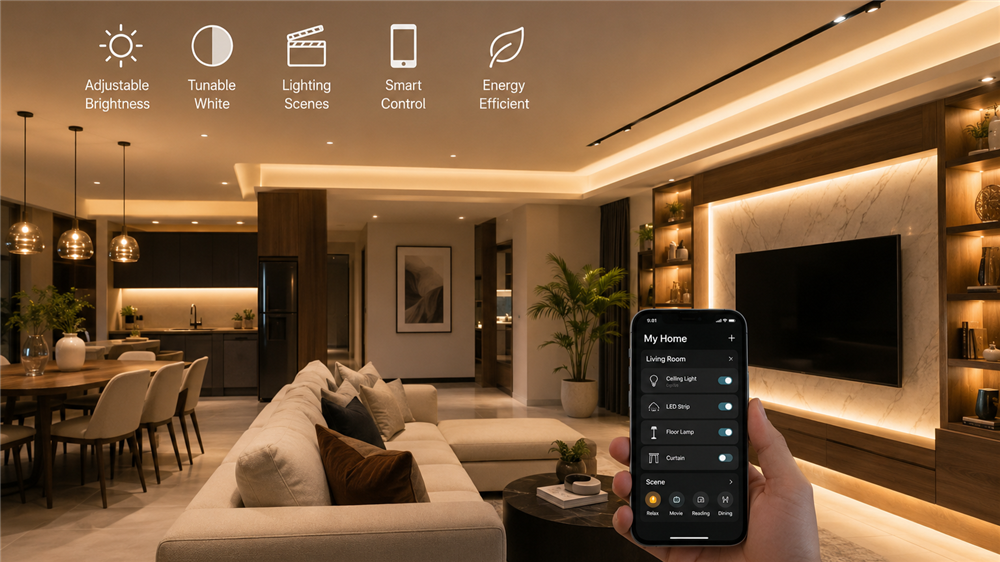
How Smart Lighting Enhances Interior Design Without Expensive Renovation

How Smart Lighting Enhances Interior Design Without Expensive Renovation


You don't need to spend thousands on renovation to make your home look more luxurious. A smart lighting system can instantly improve the atmosphere, highlight your interior design and create different moods using your smartphone, voice assistant or automation. For many Malaysian homeowners, upgrading lighting is one of the easiest and most cost-effective ways to modernise a home while improving comfort, convenience and energy efficiency.


Can smart lighting really improve my home's interior without renovation?

Yes. Smart lighting can be a game changer for your home’s appeal, with the ability to change brightness, colour temperature and lighting settings. Warmer lighting allows for a more comfortable ambiance while cooler lighting will make your area feel brighter and more expansive. These adjustments can make your current furnishings and decor look more premium without needing any structural work.


Are smart lights worth it in Malaysia?

Sure. Smart lighting is good for Malaysian homes as it is convenient, saves energy and can be changed according to different lifestyles,” he said. Whether you live in a condo, terrace house or a bungalow, you can program your lights to turn on and off automatically according to your daily routine. This will make your home more comfortable and save you money on electricity costs.


What rooms should I add smart lighting to?

Start with the rooms you use the most:

  • The living room is a room for relaxing and entertaining guests.
  • Bedroom for better sleep.
  • Kitchen to make it easier to see while you cook.
  • The home office is for getting work done.
  • Hallways and entrances are for safety and ease of use.

Start with one or two rooms to see the benefits before adding it to the rest of your home. 


What's the difference between smart bulbs and smart switches?

You can change the colours of the lights with smart bulbs, and give each bulb their own individual control. Smart switches, however, allow you to control the lights while still feeling like a regular wall switch. If you have a home with a lot of lighting fixtures, smart switches are generally a better, more scalable option.


Can smart lighting be expanded into a complete smart home?

Yes.  Smart lighting is usually the first step to a full connected smart home. Once your lighting is in place, you can easily incorporate smart door locks, security cameras, motion sensors, motorised curtains, air conditioning control and voice assistants. If you pick a compatible ecosystem from the start, upgrading in the future is much easier and cheaper.


Why Smart Lighting Matters in Malaysia

Due to the tropical climate of Malaysia, daylight changes rapidly, particularly during the rainy seasons. Hot afternoons mean many homeowners are staying inside, and the lighting inside is an important part of everyday comfort.

Open-plan layouts are becoming more common in more modern condos and landed homes, where a single lighting setup affects multiple spaces. Homeowners can use smart lighting to create different moods in the same area without making any physical changes to the layout. Electricity prices remain a concern for households, and automation features such as schedules, occupancy sensors and dimming also cut down on unnecessary energy consumption.


Real-Life Use Cases

The Living Room Entertainment

The living room is one of the best places to put smart lighting. Most families spend time together in their living room. The brighter neutral lighting creates a welcoming space for reading, cleaning, or hosting guests during the day. In the evening, with just one tap or voice command, you can switch to warm, dimmed lighting to create a cozy atmosphere for watching movies or unwinding after work.


A More Relaxed Bedroom

Smart lighting can create a healthier and more relaxing bedroom atmosphere. A bright light is helpful when you are getting ready in the morning, and a warm, dim light helps your body to relax before sleep. Set your lights to slowly increase in brightness as a gentle wake up alarm or to decrease automatically at night to help build a better bedtime routine. These little changes will not only add to your comfort, but will also make your bedroom look like a premium hotel room and you don’t have to do expensive renovations.


A Working Home Office

Now that many Malaysians are working from home at least part of the week, adequate lighting is more important than ever. Smart lighting allows you to use bright, cool white lighting during working hours for better visibility and less eye strain. Once your workday is over, you can change to a warmer lighting scene immediately to turn the office into a warm space for reading or your hobbies. This flexibility allows for a single room to serve multiple purposes, and to be a pleasant space at all times of the day. 


Tips and Best Practices

Mix Different Lighting Types

Instead of just relying on one overhead light fixture, mix ambient, task and accent lighting to create depth and balance in your home. Ceiling fixtures provide general lighting, while table lamps, LED strips and under-cabinet lights draw attention to specific areas and decorative elements. The use of various light sources increases the complexity of the interior design and contributes to the feeling of spaciousness, warmth and friendliness of rooms.


Choose the Right Color Temperature

The temperature of color has a great influence on the atmosphere of a room. Crisp white illumination is best used in kitchens, bathrooms and home offices where clarity and focus are critical. The warm white lighting is the best option for bedrooms and living rooms to create a relaxing and cozy ambiance. Using the right color temperature in each space not only enhances your furniture, flooring and wall colors, it makes each room more enjoyable to be in.


Develop a Scalable Smart Home Infrastructure

Also, consider your future needs when buying smart lighting. Look for items that are part of a cohesive smart home framework so that it is seamless to add more devices in the future. For example, after you’ve got smart lighting installed, you might want to add automated curtains, motion detectors, surveillance cameras or smart locks later on. By starting with a scalable system, you won't need to replace devices later, leading to a smoother smart home experience as your needs grow. 


Common Mistakes to Avoid

Buying Based on Price Alone

There are plenty of homeowners who go for the cheapest smart lighting they can find, ignoring things like compatibility, quality and long-term reliability. While the upfront cost might be lower, such devices often require separate apps, or are not compatible with other smart home systems. You’ll be happier with your customers and they’ll be happier with you if you work with a reliable ecosystem from the very beginning, saving you money later on by not having to replace it.


Using the Same Lighting Everywhere

It’s a common mistake to use the same brightness and color temperature throughout the house. Each room has its purpose, and the light should serve that purpose. A bright natural light might be okay for a kitchen but can look harsh in a bedroom or living area. Creating different lighting scenarios for different zones will increase comfort, make the interior look better and your home look more purposeful.


Forgetting About Automation

Some homeowners have smart lighting, but they just use it like a normal light switch and don't take advantage of many useful features. You can set schedules, create lighting scenes, and link the lights to motion sensors or voice assistants to make life easier and save energy. Automation makes your home react to your daily routine, making smart lighting a system that is much more than just remotely controlled lights.


Smart Lighting vs Traditional Lighting

Feature Smart Lighting Traditional Lighting
Brightness Control Adjustable Fixed
Colour Temperature Adjustable Usually fixed
Smartphone Control Yes No


How to Get Started

Step 1: Identify the rooms you use most

Start with spaces like the living room, bedroom, or kitchen where lighting has the biggest impact on comfort and appearance.

Step 2: Choose a compatible smart lighting ecosystem

Select devices that can grow with your future smart home plans instead of buying standalone products.

Step 3: Install smart lights or smart switches

Depending on your existing setup, you can begin with smart bulbs, smart switches, or LED light strips.

Step 4: Create lighting scenes

Set up scenes for working, relaxing, dining, entertaining, and sleeping to match your daily routine.

Step 5: Expand your smart home

Once you're comfortable with smart lighting, add smart curtains, sensors, smart door locks, cameras, or other home automation devices for a fully connected experience.


Ready to Transform Your Home?

Book a free smart home consultation with Copper Connect to discover how smart lighting can enhance your home's interior without expensive renovations. 

7 Smart Lighting Scenes Every Malaysian Home Should Have

7 Smart Lighting Scenes Every Malaysian Home Should Have


Smart lighting is no longer just about turning lights on and off using your phone. Today, homeowners in Malaysia are creating smart lighting scenes that automatically adjust brightness, colour temperature and multiple devices based on their daily routine. With one tap, your home can switch from work mode to movie mode, welcome you home after a long day, or prepare your bedroom for sleep. The best part? You do not need a huge renovation project to start. Here are seven smart lighting scenes that can make everyday living feel easier and more premium.


What is a smart lighting scene?

A smart lighting scene is a combination of lighting settings that come on together automatically or with one command or one tap. For instance, Movie Night automatically dims the lights in your living room, turns on ambient lighting and switches off the hallway lights.


Do smart lighting scenes only work with smart bulbs?

No. A full smart lighting experience can also incorporate smart switches, sensors, curtains and automation controls as well.


Are smart lighting scenes suitable for condos?

Yes, many Malaysian condo owners start with lighting automation as it usually involves less renovation than bigger smart home upgrades.


Can smart lighting save electricity?

Smart lighting reduces wasteful energy use by automatically scheduling lights and shutting them off when spaces are unoccupied.


Do I need the internet all the time?

Depending on the smart home system, some automations can continue to work locally if the internet circumstances are not optimal.


Why Smart Lighting Matters in Malaysia

Malaysian homes have unique routines. People often leave home early, return after sunset, spend more time indoors due to the weather and move frequently between bright outdoor environments and indoor spaces. Traditional lighting forces homeowners to adjust lights manually throughout the day. Smart lighting scenes eliminate repetitive actions and automatically create a smoother experience. Many homeowners initially upgrade for convenience but later discover that lighting significantly changes how comfortable and premium a home feels.


1. Welcome Home Scene

Walk into a home that feels ready for you

After dealing with traffic, carrying groceries, or returning late, entering a dark house is rarely enjoyable. A Welcome Home scene prepares the space before you even reach the switch.

Typical setup:

  • Porch lights ON
  • Living room lights 70% brightness
  • Hallway lights activated
  • Warm lighting mode enabled


2. Good Morning Scene

Wake up naturally instead of suddenly

Many homeowners begin their day under bright ceiling lights. A smarter approach gradually increases brightness.

Typical setup:

  • Bedroom lights brighten slowly
  • Curtains open automatically
  • Kitchen lights turn on
  • Morning routine activates


3. Work From Home Focus Scene

Develop better focus throughout work hours

Lighting influences your workspace’s productivity and comfort levels.

Typical setup:

  • Cooler white lighting
  • Consistent brightness
  • Less glare on screen
  • Automatic adjustment to daylight hours


4. Dinner Scene

Transform Common Meals into Superior Meals

Dining areas often use lighting that feels too bright.

Adjusting lighting changes the atmosphere immediately.

Typical setup:

  • Warm lighting
  • Reduced brightness
  • Accent lights enabled
  • Kitchen lights softened


5. Movie Night Scene

Bring cinema ambience home

One of the most popular smart lighting scenes.

Typical setup:

  • Main lights OFF
  • Ambient lights ON
  • TV lighting activated
  • Curtains closed automatically


6. Away From Home Scene

Make your home look occupied

Lighting automation can help maintain activity patterns while you are away.

Typical setup:

  • Scheduled lighting
  • Random lighting intervals
  • Security lighting activated
  • Notification alerts enabled


7. Good Night Scene

End your day with one tap

Instead of checking every switch manually, automate your night routine.

Typical setup:

  • Main lights OFF
  • Bedroom lights dim
  • Motion night lights ON
  • Optional security activation


Real-Life Smart Lighting Ideas for Malaysian Homes


Condo owners

If you live in a condo, it usually makes sense to begin with the living room scene because that is the space you use most often for relaxing, entertaining guests, and spending time with family. A Good Night automation is also very practical since it helps you switch off main lights, dim bedroom lighting, and prepare the home for sleep with less effort. 


Landed homeowners

The Welcome Home scene is one of the most beneficial for landed homeowners, as it makes the house feel ready once you come in, especially after work or on rainy evenings. Security lighting is also crucial as it may help with increasing visibility around the porch, gate and exterior spaces while making the home feel safer and more active.


Families with children

Bedtime scenes may be a great tool for families with children, helping to create a more peaceful evening routine and making it simpler for kids to wind down before sleep. Study mode lighting is another practical option since it gives children a brighter and more focused environment for homework, reading, or online classes. 


Tips & Best Practices


Start with routines first

Before buying any devices, it is better to look at your daily habits and understand how your household actually uses each room. Think about what happens when everyone leaves the house, what your evening routine looks like before sleeping and which lights tend to stay on longer than necessary. 


Keep scenes simple

It is usually better to begin with a few useful scenes rather than trying to create too many complicated ones at the start. Three well-planned scenes that match your daily routine will often give you more value than fifteen scenes that are difficult to remember or use. Simple scenes are easier for everyone in the household to understand.


Combine lighting with automation

Smart lighting is much more effective when it works together with other automation tools such as sensors and smart switches. For example, a motion sensor can turn on a light automatically when someone enters a room, while a smart switch can still give you manual control whenever needed.


Common Smart Lighting Mistakes


Buying too many devices at once

One common mistake is to buy too many smart gadgets before you realize what your home actually requires. Usually, it’s best to start slow, see what works well and build over time as your pattern becomes more obvious. This method prevents you from overspending and allows you to easily develop a smart home setup that seems useful rather than cluttered.


Using the same brightness everywhere

Another mistake is to think that all rooms should be of the same degree of brightness, yet the different spaces have varied purposes. A living room can need softer lighting for a relaxing ambiance, whereas a study space might demand brighter, more focused light for reading or work. Matching brightness to the function of each place makes the home more comfortable and much easier to utilize throughout the day.


Focusing only on aesthetics

It’s easy to be distracted by the visual appeal of smart lighting. But, effective lighting should be more than just a pretty visual effect. It should also add comfort, enhance everyday routines and make the home easier to live in. If you solely focus on looks, you could end up with lighting that looks fantastic, but doesn't really accomplish much for function, convenience or long-term use.


Smart Lighting Scenes vs Traditional Lighting

Feature

Traditional Lighting

Smart Lighting Scenes

Control

Manual

Automated

Convenience

Basic

High

Personalisation

Limited

Extensive

Experience

Static

Dynamic


How to Get Started

Starting smart lighting does not require a full renovation.

Step 1: Choose one room
Step 2: Identify one routine
Step 3: Add smart lighting control
Step 4: Expand into additional scenes

Most homeowners see the biggest difference after automating only one or two daily activities.


Ready to Build Smarter Lighting Scenes?

Schedule a FREE smart home consultation with Copper Connect today and our smart home experts will help you design a lighting system that looks modern.  

Can Any Light Be a Smart Light?

Can Any Light Be Smart Light

In recent years, the concept of smart homes has become increasingly popular, with smart lighting being one of the most accessible entry points for homeowners. But this raises a common question: "Can any light be a smart light?" While the idea of transforming any regular bulb or light into a smart one might seem appealing, the reality is a bit more nuanced. Let’s explore the possibilities, the limitations, and why choosing a dedicated smart lighting solution, like **Yeelight Pro Smart Lights**, might be your best bet.

Can Any Light Be a Smart Light?

In short, yes, but with conditions. With the help of smart plugs, smart adapters, smart switches, or smart bulbs, you can turn most traditional lights into smart lights. These gadgets connect to your home Wi-Fi and allow you to control your lighting through an app or voice commands. However, this approach has its limitations and may not offer the full range of smart features that dedicated smart lights provide.

Pros and Cons of Converting Regular Lights into Smart Lights

Pros:
1. Cost-Effective: You can transform your existing lights without needing to replace them, making it a budget-friendly option.
2. Ease of Setup: Smart plugs and switches are relatively easy to install, even for those with minimal technical skills.
3. Retains Aesthetic: If you have a light fixture you love, this option allows you to keep it while adding smart capabilities.

Cons:
1. Limited Features: Converted smart lights often lack advanced features like color-changing capabilities, dimming options, or integration with smart home ecosystems.
2. Compatibility Issues: Not all lights are compatible with smart plugs or switches, which can lead to frustration.
3. Bulky and Inefficient: Adding extra devices like smart plugs can make your setup bulkier and less energy-efficient.
4. Dependence on Third-Party Devices: Your smart light functionality will depend heavily on the reliability of third-party devices, which might not always perform seamlessly.

Why Choose Yeelight Pro Smart Lights?

Instead of converting regular lights, opting for **Yeelight Pro Smart Lights** can provide a superior experience in every way. Here’s why:

1. Seamless Integration: Yeelight Pro Smart Lights are designed to work effortlessly with major smart home ecosystems, including Google Home, Alexa, and Apple HomeKit. This ensures you have full control over your lighting through your preferred platform.

2. Advanced Features: Yeelight Pro lights offer a range of features that converted smart lights can’t match, such as customizable color temperatures, mood lighting options, and dynamic effects. You can create the perfect ambiance for any occasion with just a few taps on your phone.

3. Energy Efficiency: Yeelight Pro Smart Lights are engineered for energy efficiency, helping you reduce your electricity bills while still enjoying premium lighting. Unlike bulky smart plugs, these lights are sleek, modern, and designed to fit into any room effortlessly.

4. Enhanced Security: With Yeelight Pro, you can program your lights to simulate occupancy when you’re not home, adding an extra layer of security. This is a feature that converted smart lights can’t reliably offer.

5. User-Friendly Setup: The Yeelight app is intuitive and easy to use, allowing you to set up and control your lights without any hassle. Whether you’re tech-savvy or a complete beginner, you’ll find the setup process to be straightforward.

In summary, while it's possible to convert most of the regular light into a smart light using gadgets like smart plugs adapters or switches, this approach comes with significant limitations. If you’re looking for a truly smart lighting experience with all the bells and whistles, **Yeelight Pro Smart Lights** are a fantastic choice. They offer seamless integration, advanced features, energy efficiency, and enhanced security, all wrapped up in a user-friendly package. 

If you're looking to upgrade your traditional lights to smart lights and aren’t sure where to start, you can schedule a free consultation at our experiential showroom Copper Connect located at Kuala Lumpur, where our experienced lighting consultant will be ready to assist you.

Upgrade to Yeelight Pro Smart Lights today and transform your home lighting experience from ordinary to extraordinary.

What is Smart Lighting Systems?

smart-lighting-systems

Smart lighting systems transform how we light up our homes and workplaces in our increasingly connected world. But, what is the precise definition of a smart lighting system and how does it operate? In today’s blog, let us discuss smart lighting and its features and benefits.


Why It Matters:

If you are looking to upgrade your living or working space, it’s important to understand smart lighting systems. These systems not only provide convenience, but also enhance security, energy efficiency, and can even help with better health and well-being. So, let's take a look at why smart lighting is important and how it can make a difference in your daily lives.


Definition and Components

A smart lighting system is a network of lighting devices that you can control remotely using a smartphone, tablet, voice commands and turn on and off with an automation setup in through the systems.

In general, these systems involve but are not limited to smart bulbs, ceiling lights, pendant lights, magnetic track lights, spotlights, switches, and sensors that connect to your Wi-Fi network. With this integration, you can control your lighting settings from anywhere, resulting in a dynamic and responsive lighting environment.


Convenience and Control

One of the main benefits of smart lighting systems is the convenience they provide. Smart lighting allows you to adjust brightness, color and schedules easily. Imagine coming home late at night, light turning on once you open the door, or setting your lights to slowly brighten in the morning as you wake up. These features make daily routine tasks simpler and more enjoyable.


Enhanced Security

Apart from the convenience, smart lighting systems also play a substantial role in enhancing home security. By scheduling lights to turn on and off at certain times, you can give the impression that someone is home, even if you're not at home during vacation. Furthermore, smart lighting can be combined with security systems to activate lights in response to motion sensors, preventing potential intruders from entering your home and keeping it secure.


Energy Efficiency and Cost Savings

The potential for energy savings is another significant benefit of smart lighting systems. Smart lighting devices are often LED-based, which are more energy-efficient than traditional incandescent bulbs. Plus, by scheduling and remotely controlling lights, you can ensure they are only on when necessary, reducing unnecessary energy consumption and lowering your electricity bills.


Customization and Mood Setting

Smart lighting systems enable you to customize them to create the perfect atmosphere for any occasion. Whether you're having a dinner party, watching a movie, or just relaxing at home, you can adjust the lighting to suit your mood. Personalizing your space can be even more flexible thanks to color-changing capabilities offered by many smart lighting systems.

In conclusion, smart lighting systems can be a valuable addition to any home or office due to the variety of benefits they offer. Remote control, enhanced security, energy efficiency, and customizable ambiance are just some of the benefits of smart lighting that can significantly improve your quality of life.


Free Smart Lighting Consultation Session

Therefore, if you are planning to upgrade your home's traditional lighting to smart lighting, you can get in touch with our lighting experts by requesting a free consultation at our smart home experience showroom located at the center of Kuala Lumpur. You can also visit our smart lighting solution page to learn more about this topic.

Secure Your Free Consultation Session Today -> Book A Slot