


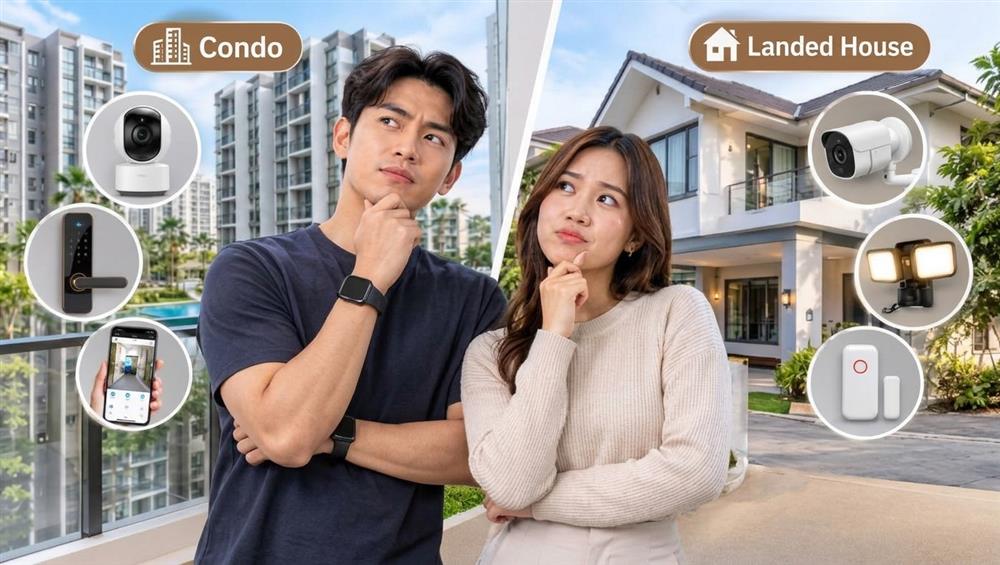
Picture two Malaysian families. One lives on the 18th floor of a condo in Mont Kiara. The other lives in a double-storey terrace house in Puchong. Both want to feel safe at home, but their homes are very different, and so are their security needs.
Many people buy smart security devices because they are on sale or look cool, then find out they bought the wrong things. This guide, based on Copper Connect's work in Malaysian homes, shows what each home type really needs.
Why Does This Matter?
Home break-ins are not a rare story here. Malaysia's crime index went up 11.1% in 2024, with 58,255 cases reported compared with 52,444 the year before. House break-ins and thefts dropped slightly, but 77.6% of them happened at night.
A US government security report also notes that single-family homes are the most common targets, and thieves usually pick places where nobody is home. It adds that gated high-rise apartments with 24-hour guards and electronic access control have a much lower burglary rate than other housing types.
So a condo already has some built-in protection, while a landed house has to build its own. Spending money in the right place saves you money and worry.
1. A smart door lock is the best first step for both
Keys get lost, copied, or hidden under flower pots. A smart door lock lets you open the door with a fingerprint, a code, or your phone. You can also give a temporary code to a cleaner or a repairman and delete it later.
Example: A condo owner in Bukit Jalil rents out a room on weekends. With a smart lock, she sends guests a code that stops working on checkout day. No key handover is needed. For a landed house, a smart lock on the main door is just as useful, but the gate and side doors need attention too.
2. Cameras: inside for condos, outside for landed homes
Condos already have guards, lobby cameras, and lifts that need access cards. So the weak spot is the area right outside your unit door. A small camera near the entrance, or a video doorbell, is usually enough.
A landed house is open on all sides, so outdoor cameras matter more. Point them at the gate, the porch, the car porch, and the back door.
Example: A family in Subang Jaya put one camera at the front gate and one at the kitchen back door. That covered the two spots where thieves most often try to get in.
3. Door and window sensors catch sneaky entry
These small sensors send an alert when a door or window opens. They are cheap, easy to fit, and work well.
Landed houses have many more entry points, such as grille doors, sliding doors, and upstairs windows. Condo owners should look at balcony sliding doors, especially in lower or mid floors.
Example: A terrace house owner set sensors on the back sliding door. When it opened at 2 a.m., his phone buzzed right away, and the person left in a hurry.
4. Motion sensors and sirens add a loud warning
Motion sensors notice movement inside your home when nobody should be there. Pair one with a loud siren, and most thieves will leave fast. They do not like noise or attention.
For landed homes, this works well in the living room, the hallway, and the staircase. A condo usually needs just one sensor near the main living area.
Example: A couple went balik kampung for Hari Raya for a week. They turned on "away mode," so any movement in the house would set off the alarm and send them a message.
5. Smart lighting is security that people forget
Thieves do not like bright, busy-looking homes. Smart lights can turn on at sunset, or switch on when someone walks by. You can also set lights to turn on and off in a pattern while you are away, so the house looks lived in.
This matters most for landed homes with dark porches and driveways. Condo owners can use it to make an empty unit look occupied, for example by lighting up the living room each evening.
Example: A homeowner in Kajang set the porch and garden lights to come on at 7 p.m. and the bedroom light to switch on and off later. Neighbours thought someone was always home.
6. A video doorbell or intercom helps you know who is outside
Delivery riders, visitors, and strangers all come to the door. A video from smart doorbell shows you who is there, even when you are at work or in bed.
In a condo, it helps with people who get past the lobby, like someone following a resident in. In a landed house, a gate-mounted camera or doorbell lets you check a visitor before opening the gate.
Example: A mum in Cheras saw a stranger at her gate on her phone while she was cooking. She did not open the door, and the stranger walked away.
7. A smart hub, alerts, and backup power tie everything together
Devices work best when they talk to each other. A smart hub is the "brain." It lets a door sensor turn on the lights, or an alarm start recording the camera. Make sure your Wi-Fi is strong and, if possible, add a small power backup, because blackouts happen.
Example: In a bungalow, one tap on "Leaving Home" locks the door, turns off the lights, and turns on all the sensors. It is easy enough for the whole family to use, even the grandparents.
Final Thoughts
You do not need to buy everything. A condo and a landed house are different, so their smart security setups should be different too. Start with the weak spots of your home, then add devices step by step.
Ready to Make Your Home Safer?
Not sure where to start? Come and see it for yourself. Book a free consultation session and visit the Copper Connect showroom. You can try the devices, ask questions, and get friendly advice for your own home. Schedule your visit today, and take the first step towards a safer, smarter home for the people you love.


